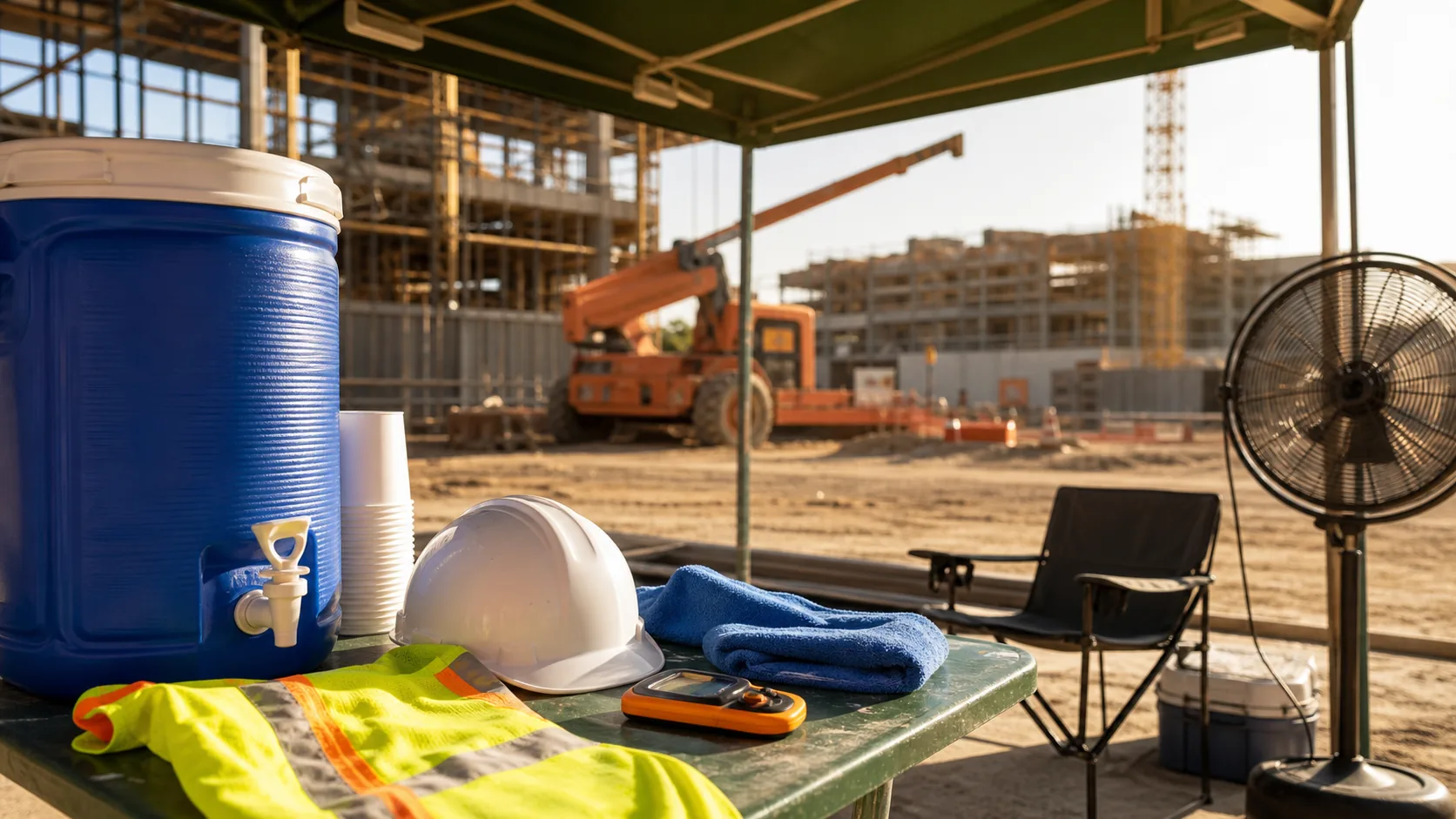
Heat illness is one of the few workplace hazards that gets more dangerous the longer it's ignored. Unlike a struck-by hazard or an electrical fault, heat stress builds gradually. That is why it catches experienced crews off guard. By the time someone looks visibly unwell, they may already be in the danger zone.
This guide is written for the person running the shift, not the person writing the policy: quick reference points you can actually use between tasks.
Heat rash, heat cramps, heat exhaustion, heat stroke: four conditions, four responses
These are four separate conditions, not one illness moving through stages. NIOSH's first aid guidance is explicit that symptoms can show up in any order and a worker doesn't need every symptom in a category to have it. A worker can develop heat rash without ever having heat cramps, and heat exhaustion can tip into heat stroke fast if it isn't treated. Knowing which condition you're looking at determines whether you need a water break or an ambulance.
- Heat rash: A cluster of small red pimples or blisters, usually on the neck, upper chest, groin or in elbow creases. Move the worker to a cooler, less humid area and keep the rash dry. Skip the ointment or cream: trapping warm, moist skin can make it worse.
- Heat cramps: Painful cramps or spasms in the abdomen, arms or legs, from sweating out salt and fluid. Have the worker drink fluids every 15 to 20 minutes and eat a snack or a sports drink. Get medical help if they have a heart condition, are on a low-sodium diet, or the cramps haven't eased within an hour.
- Heat exhaustion: Headache, nausea, dizziness, weakness, irritability, thirst, heavy sweating and a raised body temperature. Get the worker out of the heat, remove unnecessary clothing, cool them with water or an ice bath and keep fluids coming. Call for medical help or take them to a health facility for evaluation, and stay with them until help arrives. Do not tell the worker to "walk it off."
- Heat stroke (medical emergency): Confusion, slurred speech, loss of consciousness or seizures, and a very high body temperature. Skin can be hot and dry, but it can just as easily still be sweating heavily: sweating does not rule out heat stroke. Call emergency services immediately and start active cooling (cold water immersion, or cold wet towels if immersion isn't possible) while you wait. Do not wait to "see if they improve."
"The line between heat exhaustion and heat stroke is often confusion. If a worker isn't making sense, treat it as an emergency, not a break."
Running an effective buddy system
The buddy system fails when it becomes a checkbox. Two names on a sign-in sheet who never actually look at each other. A working buddy system has three properties:
- Proximity, not just pairing. Buddies need to be close enough to notice a change in gait, speech, or color, rather than merely being present on the same site.
- A specific check-in cadence. Every 20 to 30 minutes during high heat-index periods, not "whenever you think of it."
- Permission to stop the job. Buddies need explicit authority to pause work and get a coworker to shade without needing supervisor sign-off first.
Building a heat plan crews will actually follow
Most heat illness prevention plans fail for the same reason most safety plans fail: they assume ideal conditions and full compliance. A realistic plan plans for the shortcuts crews will take under pressure.
- Pre-stage water, don't rely on requests. If getting water means walking 200 meters and asking, workers will delay hydrating. Put water within sight of the work area.
- Schedule around the heat index, not the clock. Shift the heaviest physical tasks earlier or later in the day when the forecast calls for it. Decide this the night before, not at noon when it's too late to replan.
- Acclimatize new and returning workers deliberately. Workers new to heat, including those returning from vacation or leave, need a gradual ramp-up over 7 to 14 days. Most heat fatalities involve workers in their first week on the job.
- Make rest breaks visible, not apologetic. If supervisors treat shade breaks as a productivity failure, workers will hide their symptoms to avoid the perception of slowing down.
A one-page checklist for hot shifts
- Check today's heat index before the shift starts, not after someone feels unwell.
- Confirm water and shade are staged at the work area, not just at a central point.
- Brief the buddy system pairing and check-in interval at the toolbox talk.
- Identify any new, returning, or unacclimatized workers and adjust their pace.
- Know your evacuation and emergency contact plan before you need it.
None of this requires new budget or new equipment. It mostly requires deciding, before the heat arrives, that a five-minute break is always cheaper than a heat stroke.
Sources & Further Reading
Author/editor: The HSE Hub Editorial Team
Last reviewed: September 19, 2026
Disclaimer: This guide provides general HSE education. Apply applicable law, your heat illness prevention plan and competent medical advice to your specific operation.